Fly. Think. Navigate.
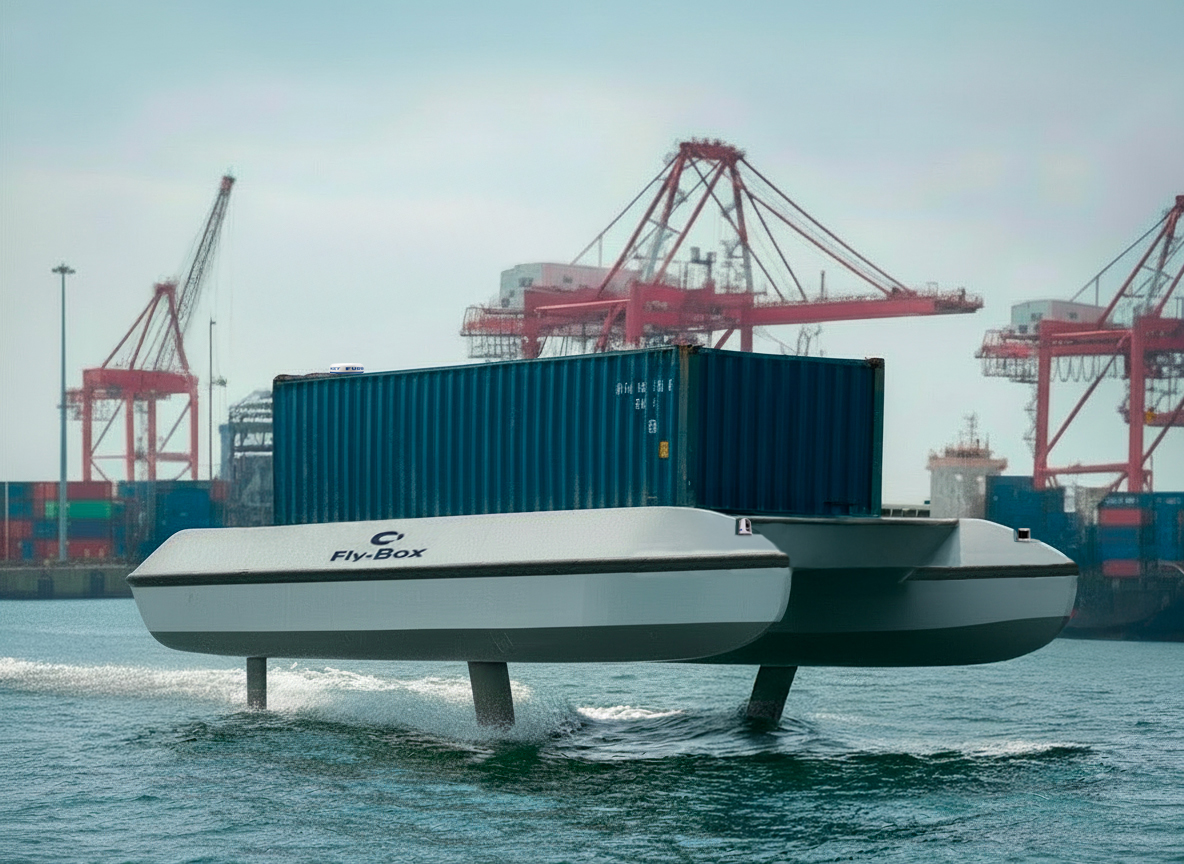
Fly-Box World is developing a new generation of autonomous hydrofoil vessels for container transport, powered by intelligent navigation and fleet management technologies.
- Hydrofoil flight demonstrated
- Hydrofoil expertise since 1987
A maritime industry at a turning point
Global maritime logistics is under growing pressure to move goods faster, more efficiently and with more flexibility. Three structural challenges are creating demand for a new generation of maritime transport.
Rising container flows and concentrated port activity strain existing infrastructure and create bottlenecks.
Supply chains need predictable transit times, better cargo visibility and transport that adapts to changing needs.
Autonomous technologies and pressure to cut emissions are accelerating the transformation of maritime operations.
Maritime freight does not need bigger ships.It needs smarter ones.
Between speed, capacity and flexibility
Logistics networks are built either for high-volume maritime transport or for flexible road delivery. Floco does not replace them: it serves the needs where speed, flexibility and smaller volumes create value.
Direct, high-frequency container transport across the road network, exposed to traffic, driver availability and road costs.
Cost-efficient for consolidated volumes on navigable waterways, with flexibility set by infrastructure, schedules and water conditions.
Built for consolidated container volumes, with cost efficiency tied to utilisation, routes and service frequency.
Autonomous hydrofoil vessels for individual container moves on suitable corridors, with flexible deployment and shorter transit times on selected routes.
Four applications, one platform
A new logistics opportunity is opening between conventional maritime capacity and the flexibility of road transport.
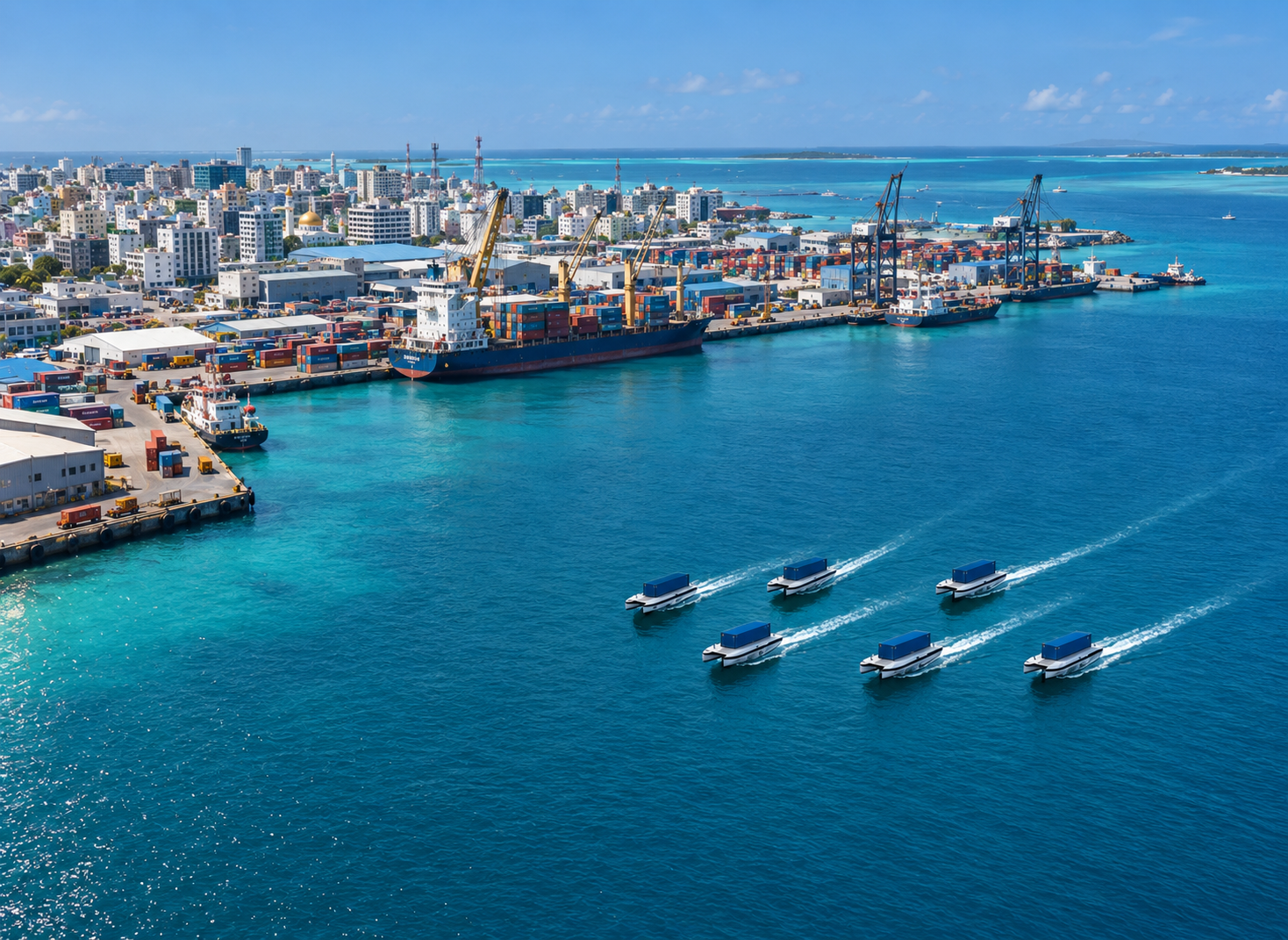
Fast, flexible container transfers between ports and terminals, less dependent on congested roads and rigid maritime schedules.
Direct, high-frequency maritime links between coastal logistics hubs, without the need for large consolidated volumes.
Reliable maritime access for islands, archipelagos and underserved coastal territories where transport options are limited.
More flexibility and predictability for high-value, temperature-sensitive and time-critical shipments.
Transit at Floco's ~30 kn cruise speed, quay to quay, excluding port handling.
Floco keeps watch for marine life
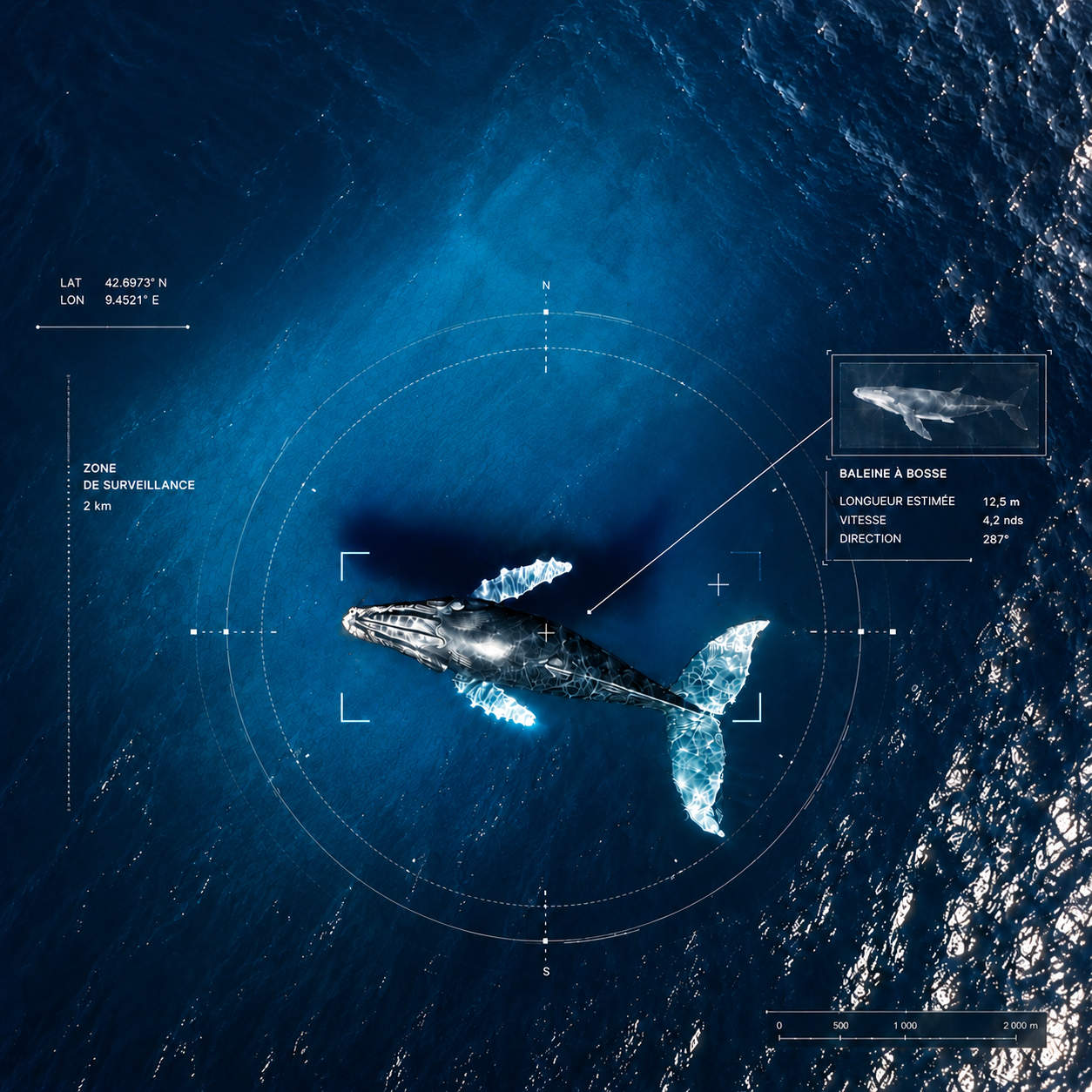
Collisions with ships are a major threat to large whales, and the risk grows with speed. A fast vessel has to see further and react sooner. Environmental perception, collision avoidance and marine life intelligence are built into Floco from the start.
- Detect
Environmental perception scans the sea surface ahead, continuously.
- Identify
Onboard models recognise blows, backs and fins, and estimate heading.
- Avoid
Floco slows down, comes off the foils if needed, and steers clear.
- Share
Each sighting is logged and pushed to the fleet, which reroutes around the area.
Protected areas and seasonal migration routes are built into navigation, with automatic speed limits.
Sightings can be shared with marine researchers and protected-area managers.
The future of maritime transport is already on its way.
A feasibility study for your corridor
Ports, operators, cargo owners and coastal territories: tell us about your routes. Each project starts with a feasibility study of your corridor: route, volumes and operating model.